How to improve player retention and measure what works
 By Mike Dalton ·
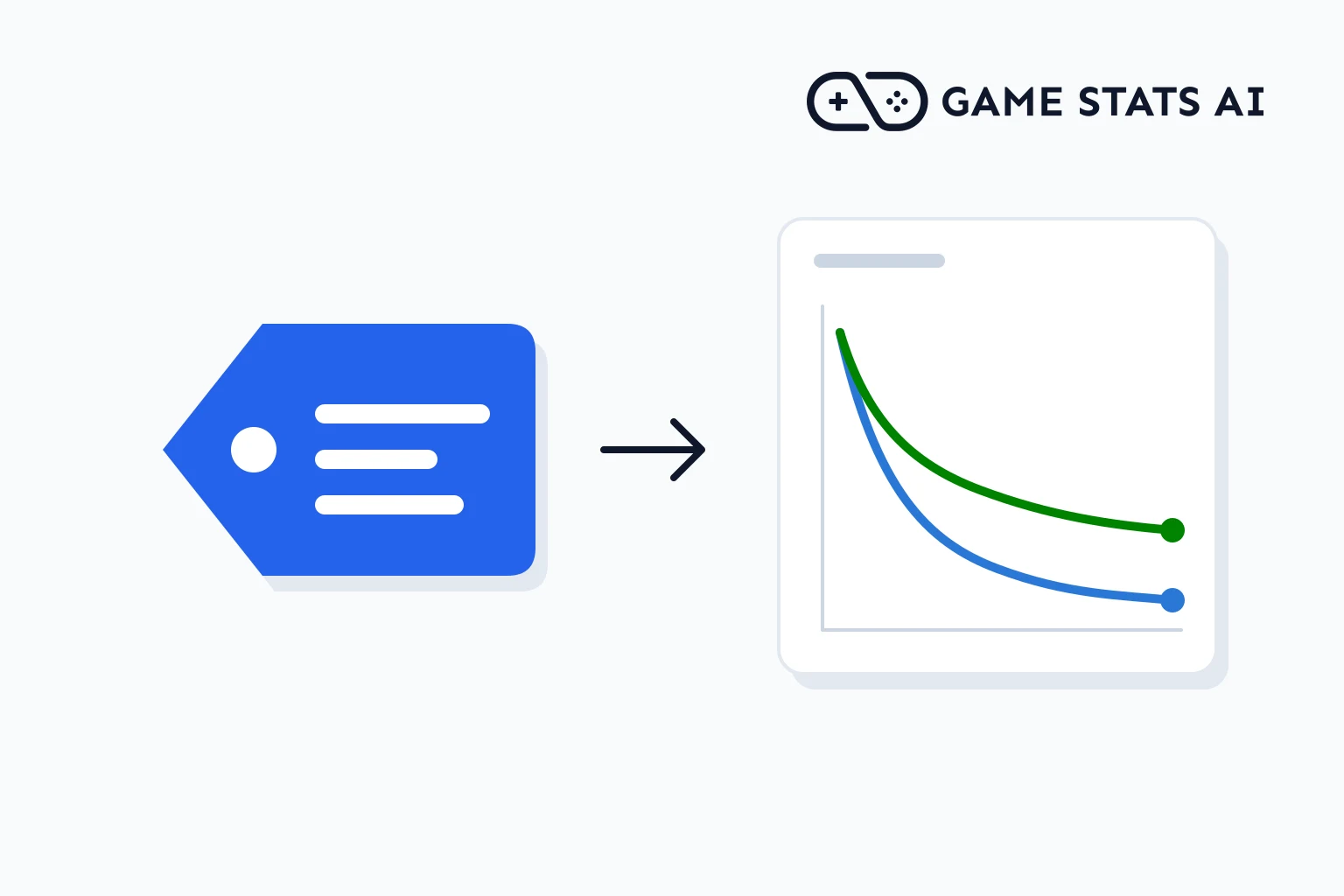
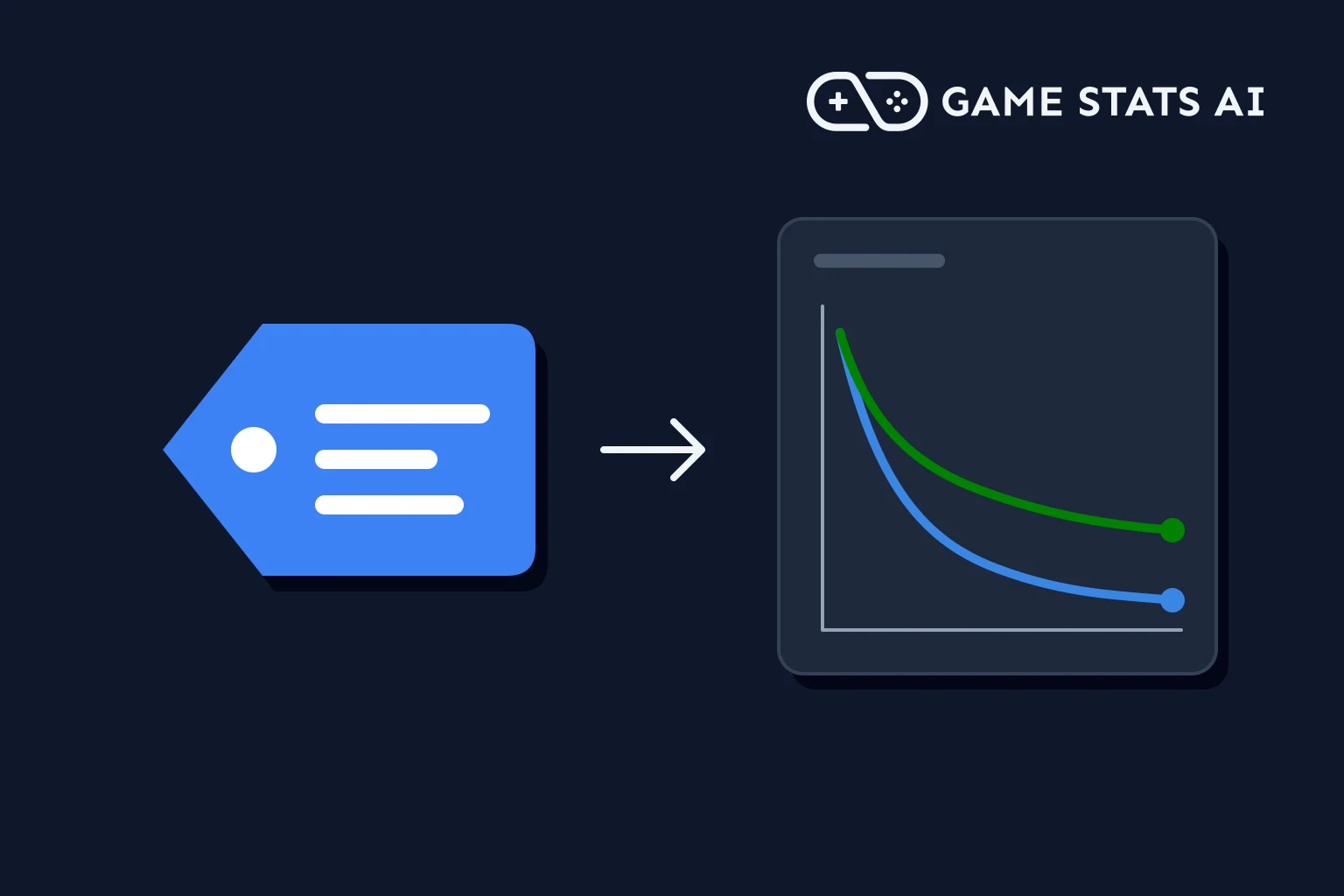
Player retention is the share of players who keep playing your game after their first day. The fix for low retention depends on when players leave: a game that loses players in the first session has a different problem from one that loses them after a month. This guide groups the common fixes by when players leave, names the metric that shows whether each one worked, and explains how to compare players before and after a change.
For how D1, D7, and D30 retention are calculated and what counts as a good number, see how to measure game retention.
Find out when players leave
Look at D1, D7, and D30 retention together before you change anything:
- Low D1: most new players don't come back after their first session. The problem is in the first minutes: the tutorial, the first levels or matches, performance, or the game not matching what the store page promised.
- Good D1, low D7: players liked the first session but found no reason to return. The problem is the reasons to come back: goals, progression, and rewards for the next few days.
- Good D7, low D30: players stayed a week and then ran out of things to do, or stopped enjoying what they were doing. The problem is long-term content, difficulty, or fairness.
Fix the earliest drop first. A player who leaves on day 0 never sees the content that keeps players for a month, so improving D30 does little while D1 is low.
Improve the first session (D1)
- Get players into the game sooner. Shorten the tutorial, teach by playing instead of with text, and let players reach their first match, level, or reward quickly.
- Check the early levels. One level that is much harder than the ones around it stops many new players. Find which levels players get stuck on shows how to measure completion rates per level and find it.
- Fix crashes and long loading times. A player who hits a crash in the first session rarely tries again.
- Match the store page. If the first session feels different from the screenshots and description, players leave and, on paid games, ask for a refund.
What to measure: D1 retention, the completion rate of the first levels or matches, and session length for new players. A shorter tutorial should show up as more new players finishing the first level, then as higher D1.
Give players reasons to come back (D7)
- Goals for the next session. Daily or weekly challenges, a next unlock that is close, or an unfinished run give players a reason to open the game tomorrow.
- Visible progression. Levels, ranks, collections, and unlocks show players how far they've come and what is next.
- Playing with others. Friends, teams, and guilds bring players back for each other.
- Notifications, used sparingly. A reminder about something the player cares about, such as an energy refill or a friend's challenge, can bring them back. Too many lead players to turn notifications off or uninstall.
What to measure: D7 retention, sessions per player, and the share of players who complete daily goals. If players complete the daily goals but D7 doesn't change, the goals aren't the reason players return.
Keep players past the first month (D30)
- New content on a schedule. Events, seasons, new maps, and characters give players who finished everything something to come back for.
- Long-term goals. Ranked ladders, mastery, and rare collectibles take months to complete.
- Fair, balanced matches. In a competitive game, players stop when one strategy wins everything or when matches feel decided before they start. How to balance a game with data covers win rates and pick rates.
What to measure: D30 retention, weekly and monthly active players, and stickiness (daily active players divided by monthly active players), which DAU/MAU for games explains. A season that works should raise weekly active players during the season, compared with the same weeks of the season before.
What lowers retention
Some changes push players away even when they earn more in the short term:
- Paying to win. Players who lose to items they can't buy without paying stop playing. Game monetization models shows how to check whether paid items win more matches.
- Too many ads. Interstitials after every level earn more per player until players leave. Compare retention between versions with more and fewer ads, not just ad revenue.
- Difficulty spikes after an update. A rebalanced level or enemy can stop players who used to get past it. Compare completion rates per level by version after every update.
- Bugs in a release. Check D1 for the cohorts that started after each release. A sudden drop is often a bug, not a design problem.
How to tell if a change worked
Strategy lists rarely say how to check whether a change helped. Retention changes slowly and moves by chance, so a careful comparison matters more than the fix itself.
- Compare cohorts before and after the release. Group new players by the day they started. Cohorts that started after the release played the new version from their first day, so compare their retention with the cohorts from the weeks before.
- Wait for the days to finish. A cohort's D7 isn't known until its day 7 has ended, and D30 takes a month. Judge a change by D1 after a few days, and by D7 and D30 only when enough cohorts have reached those days.
- Account for sample size. With 200 new players in each group and D1 around 30%, a difference of up to about 9 points between the two groups can happen by chance. With 1,000 players in each group, it's about 4 points. Small games need more days of cohorts before a change is clear.
- Change one thing at a time. If a release shortens the tutorial and adds daily rewards, you can't tell which one moved D1 and which moved D7.
- Watch who is joining. A sale, a feature on the store, a marketing campaign, or a holiday brings in different players, and their retention differs from your usual players. Compare cohorts that came in the same way when you can.
The margin of error above comes from the same calculation as win rates: for a share p measured from n players, it is about 1.96 × √(p × (1 − p) / n), and about 1.4 times that for the difference between two groups of the same size. The sample size section of the game balance guide explains it.
Measure player retention in Game Stats AI
Game Stats AI has three reports for this, built from the matches, events, and progression events your game already sends:
- Retention report: D1, D7, and D30 retention for each cohort of new players, by the day they started, with daily, weekly, and monthly active players and stickiness. Days that haven't finished stay empty, and averages are weighted by cohort size. You choose what counts as activity: matches, events, progression events, or any combination. Set the date range to the weeks before or after a release to compare their cohorts. To check one cohort against published benchmarks, use the game retention calculator.
- Session report: session length, sessions per player, and playtime per player, from an event with a duration or from start and end events.
- Progression report: completion rates for each level or stage, by version, to find where new players stop.
You can also ask Claude about your retention through MCP, for example Did D1 retention change for players who started after October 15?
Frequently asked questions
What is player retention?
Player retention is the share of players who keep playing a game after they start. It is usually measured as D1, D7, and D30 retention: the share of new players who play again 1, 7, and 30 days after their first day.
Why do players stop playing a game?
The most common reasons depend on when they leave. Players who leave after the first session often found the start too slow, too hard, or different from what they expected. Players who leave after a week found no reason to return, and players who leave after a month ran out of content or stopped enjoying the competition.
What is the difference between retention and churn?
Retention measures the share of players who come back. Churn measures the share who stop playing. Improving retention lowers churn, but the two are usually calculated over different periods, so they don't always add up to 100%.
How long should you wait before judging a retention change?
Wait until enough cohorts have reached the day you are measuring. D1 needs a few days of cohorts after the release, D7 needs at least two weeks, and D30 needs more than a month. Small games need more days, because each day's cohort is smaller.
Do daily rewards improve retention?
They can give players a reason to return, but they don't help if players don't care about the reward. Compare D7 retention and sessions per player for cohorts before and after you add them, rather than assuming they work.
What is a good player retention rate?
It depends on the platform and genre. In GameAnalytics' 2026 benchmarks, the median mobile game had about 22% D1 retention and the median PC game about 7%. How to measure game retention has the full tables.